Card Grading in 2026: The Complete Playbook (PSA, BGS, CGC, SGC)
This post contains affiliate links — we may earn a commission at no extra cost to you.
I’ve submitted hundreds of cards to PSA, BGS, and CGC since 2015. This page is the complete framework I use to decide what to grade, which grader to use, and how to avoid the expensive mistakes that turn grading from a profit center into a tax.
In This Article
- Why grade cards at all?
- PSA vs BGS vs CGC vs SGC in 2026
- The grading ROI formula
- Pre-submission prep (what to check before you send)
- Raw card sourcing for grading
- Common mistakes that destroy returns
- Frequently Asked Questions
- Dive Deeper: Grading Guides
Why Grade Cards at All?
Grading does three things: 1. Authenticates the card as genuine (vs fake, altered, or trimmed). 2. Assigns a universal condition grade so buyers know exactly what they’re getting. 3. Locks in a premium price at higher grades (PSA 10, BGS 9.5+, CGC 10 Pristine).
For cards worth $100+ raw with a strong multiplier to PSA 10, grading is usually worth it. For commons or cards worth under $40 raw, fees eat the returns.
The core question isn’t “should I grade?” — it’s “does the math work for this specific card at this specific moment?”
PSA vs BGS vs CGC vs SGC: 2026 Comparison
| Feature | PSA | BGS | CGC | SGC |
|---|---|---|---|---|
| Market trust | Highest for Pokemon & vintage | Premium for vintage + subgrades | Growing fast in TCG | Strong for vintage sports |
| Top grade | PSA 10 | BGS 10 “Black Label” | CGC 10 “Pristine” | SGC 10 Pristine |
| Typical cost | $24.99 bulk → $79.99 regular | $25+ (varies) | $15-$30 typical | $18-$30 typical |
| Turnaround | 4-8+ weeks | 2-6 weeks | 1-4 weeks | 2-4 weeks |
| Subgrades offered | No | Yes (centering/corners/edges/surface) | Limited | No |
| Resale ceiling | Industry high | Premium on BGS 10 Black / 9.5+ | Catching up fast | Fair but limited |
Quick selection heuristic: - Modern Pokemon / TCG → PSA if resale is the goal and you can wait; CGC if speed matters - Vintage high-end (>$500 raw) → BGS for subgrades, PSA for maximum market reach - Sports vintage → SGC or PSA; SGC for faster turnaround with the iconic “tuxedo” label - Bulk modern (<$100 PSA 10 estimate) → CGC bulk rates are hard to beat
See our PSA submission step-by-step for the actual mechanics of sending cards in.
The Grading ROI Formula
The math that determines whether to grade any specific card:
- Net graded proceeds = PSA 10 sold price × (1 − 0.13 eBay fee) − $5 shipping
- Grading profit = Net graded proceeds − (raw cost + grading fee)
- Break-even raw = Net graded proceeds − grading fee
Example: Umbreon VMAX Alt Art from Evolving Skies - Raw: $300 - PSA 10 median (90-day): $1,400 - Grading fee: $25 - Net graded: $1,400 × 0.87 − $5 = $1,213 - Grading profit: $1,213 − $325 = $888 - Break-even raw: $1,188 (you can pay up to this much raw and still break even after grading)
Now the catch: not every submission grades PSA 10. Real-world hit rates on clean-looking raws are: - Fresh pack pulls with visual 10 candidates: 60-70% PSA 10 - Pack-fresh but not pre-screened: 30-40% PSA 10 - Raw purchased off eBay without inspection: 15-25% PSA 10
Multiply your expected profit by the realistic hit rate, then subtract the lower-grade outcomes. A 50% PSA 10 hit rate on Umbreon above = expected value of ~$444 per submission.
Pre-Submission Prep
Before cards go out, check these in order:
- Centering — Use a centering tool or ruler. 55/45 or worse kills grade hits. Aim for 55/45 or tighter on both axes. It’s the single biggest factor in whether a card gems — our Pokemon card centering guide for grading walks through measuring it and reading the tolerances by grade.
- Corners — Magnified inspection (jeweler’s loupe, 10x). Any softening or whitening is a grade drop.
- Edges — Chipping, whitening, fraying all cap grade at 9 or below.
- Surface — Scratches, print lines, marks. Surface defects are the #1 reason modern cards don’t 10.
- Holo pattern / texture — For modern SIRs and Alt Arts, look at the texture under good light.
Cards that fail any of these get either re-cased for later grading or sold raw. Submit only your best.
Protection for shipping: - Penny sleeve — first layer - KMC Perfect Fit inner sleeve — optional second layer for premium cards - Semi-rigid card holder (PSA-approved) — third layer - Team bag and bundled in shipping sleeve — final layer
Raw Card Sourcing for Grading
You can’t grade what you don’t have. Sourcing strategies for graders:
- Fresh pack pulls — best hit rate but slowest volume. Buy sealed, open carefully, pull only NM+ candidates.
- Single-card eBay raw — faster but riskier. Filter to BIN listings with 6+ high-res photos, sellers with >99% feedback, and clear “Near Mint” language. Verify centering and corners in photos before buying.
- Local card shops (LCS) — can find underpriced NM raws, especially on older sets LCS owners don’t know the current market for.
- Card shows — best for in-person inspection, but premium over eBay.
- Estate sales / collection liquidations — highest risk, highest reward. Requires volume to offset the duds.
Pro tip: keep a running “grading want list” of cards where you’ve calculated the ROI works. When one surfaces raw at a good price, you can buy with confidence because the math is pre-done.
Common Mistakes That Destroy Returns
- Grading cards worth less than $40 raw. Fees eat everything. Rule: PSA 10 estimate must be 4x raw minimum.
- Skipping the centering check. I know. It feels obsessive. Do it anyway. 20% of grade drops I’ve seen came from cards that looked fine to the naked eye but were 60/40 centered.
- Using non-PSA-approved sleeves. PSA requires penny sleeve + semi-rigid. Rigid toploaders aren’t accepted.
- Forgetting declared value. Over-declaring = upcharge risk. Under-declaring = can get rejected and returned. Match declared value to the raw price you paid or a reasonable market estimate.
- Choosing the wrong service tier. Value service ($32.99) is the sweet spot for most modern cards under $500 market. Using Regular ($79.99) on a $100 card obliterates the ROI.
- Ignoring turnaround time. PSA queue times have stretched to 8+ weeks on some tiers. If the market moves 20% during your wait, your calculated profit evaporates.
Frequently Asked Questions
What’s the minimum card value to grade?
Rough rule: $40 raw minimum AND a 4x+ PSA 10 multiplier. Below that threshold, grading fees + eBay fees consume most of the profit. For very high-volume bulk (100+ cards), CGC bulk at $15/card can shift this floor down to $20-25 raw.
Which grader has the best resale on modern Pokemon?
PSA has the highest median resale for PSA 10 on most modern Pokemon cards. CGC has been closing the gap quickly, and for specific cards the CGC 10 Pristine premium can approach PSA 10 pricing. Always check current eBay 30-day sold comps for your specific card before choosing a grader.
How long does PSA take in 2026?
Value Bulk: 4-6 weeks typical. Value: 6-8 weeks. Value Plus/Max/Regular: 8-12+ weeks. Bulk submission + wait times have been volatile since the 2024/2025 consolidation. Expect wait times to fluctuate.
Does BGS 9.5 sell for more than PSA 10?
Generally no, for modern cards. BGS 9.5 Gem Mint is a rung below BGS 10 “Black Label” and usually sits at or slightly below PSA 10 pricing. For vintage cards, BGS 9.5 with strong subgrades can exceed PSA 10.
Is pre-grading worth paying for?
“Pre-grading” services (centering checks, corner inspection) are either free (do it yourself with the checklist above) or a wasteful $3-5/card. For high-value submissions ($500+ raw), a jeweler’s loupe + good lighting is a one-time $15 investment that pays for itself on the first submission you decline to send.
What if my card comes back a 9 or lower?
Depends on the card. For PSA 9 on premium modern Pokemon (Charizards, alt arts), the resale is often still profitable — just at smaller multiples. For PSA 8 or below on modern, you often break even or take a small loss. Always check the graded-value table for each grade before submitting.
Dive Deeper: Grading Guides
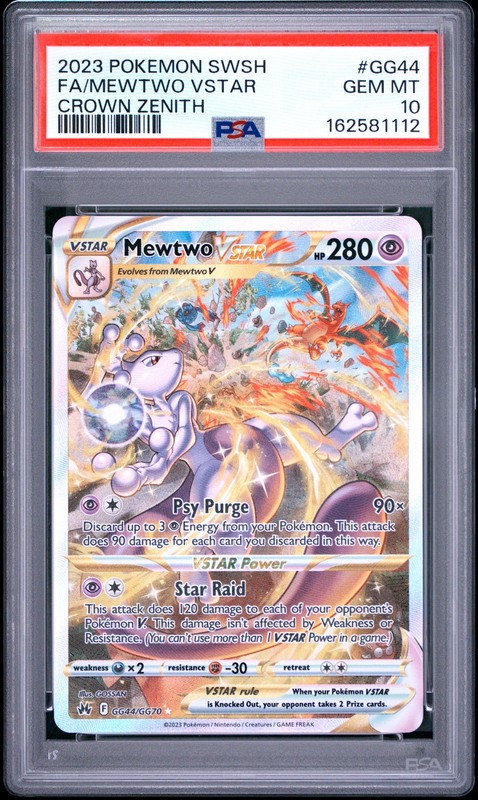
Mewtwo VSTAR #GG44 Pokemon Crown Zenith: Should You Grade It? PSA 10 ROI 2026
Real ROI math on grading Mewtwo VSTAR #GG44 from Pokemon Crown Zenith. PSA 10 vs raw prices, break-even analysis, multi-grader comparison.
Card Grading Costs Breakdown 2026
Understand 2026 card grading costs, services, and ROI. Make informed decisions for your valuable collections.
Sports Card Grading Trends 2026
Explore sports card grading trends for 2026, focusing on what drives value beyond price and grading ROI.

Charizard ex #223 Special Illustration Rare Pokemon Obsidian Flames: Should You Grade It? PSA 10 ROI 2026
Real ROI math on grading Charizard ex #223 Special Illustration Rare from Pokemon Obsidian Flames. PSA 10 vs raw prices, break-even analysis, multi-grader comparison.
Basketball Cards That Could Rise in 2026
Discover which basketball cards that could rise in 2026 by focusing on long-term supply stability, high-grade scarcity, and brand consistency.
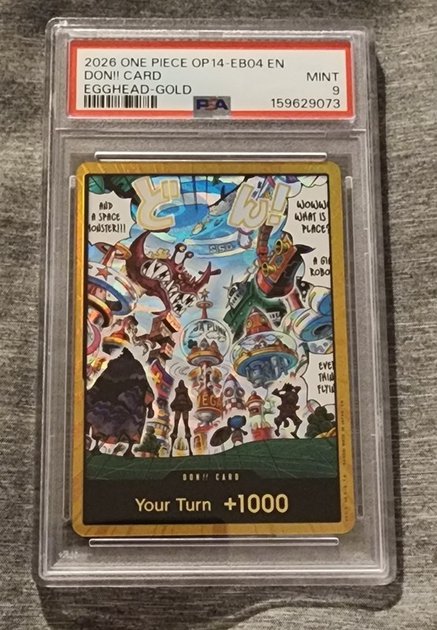
One Piece TCG Red Super Alternate Art Guide (2026 Guide)
Unlock the secrets of One Piece TCG Red Super Alternate Art! Your 2026 guide to identifying, grading, and investing in these coveted cards.

Greninja ex #214 Special Illustration Rare Pokemon Twilight Masquerade: Should You Grade It? PSA 10 ROI 2026
Real ROI math on grading Greninja ex #214 Special Illustration Rare from Pokemon Twilight Masquerade. PSA 10 vs raw prices, break-even analysis, multi-grader comparison.
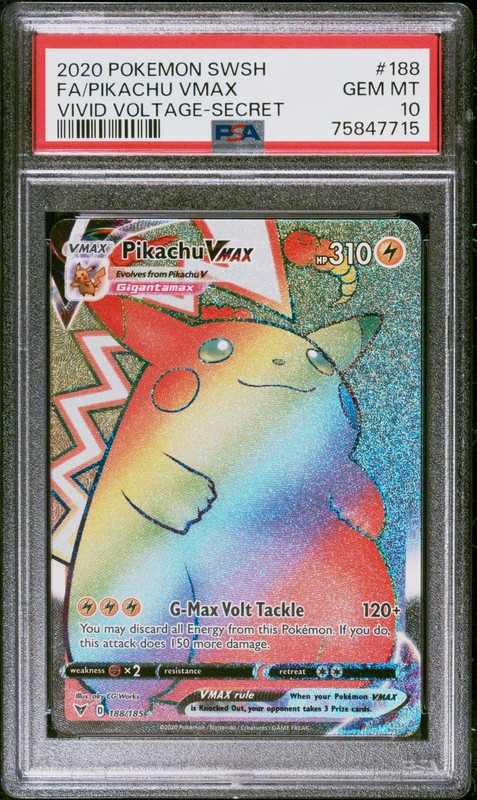
PSA vs BGS vs CGC for Pikachu VMAX #188 Pokemon Vivid Voltage: Which Pays Most in 2026?
Real 2026 grader comparison for Pikachu VMAX #188 Pokemon Vivid Voltage — PSA 10, BGS 9.5, CGC 10 prices, turnaround times, fees, and which grader to choose.

PSA vs BGS vs CGC for Lugia V #186 Pokemon Silver Tempest: Which Pays Most in 2026?
Real 2026 grader comparison for Lugia V #186 Pokemon Silver Tempest — PSA 10, BGS 9.5, CGC 10 prices, turnaround times, fees, and which grader to choose.
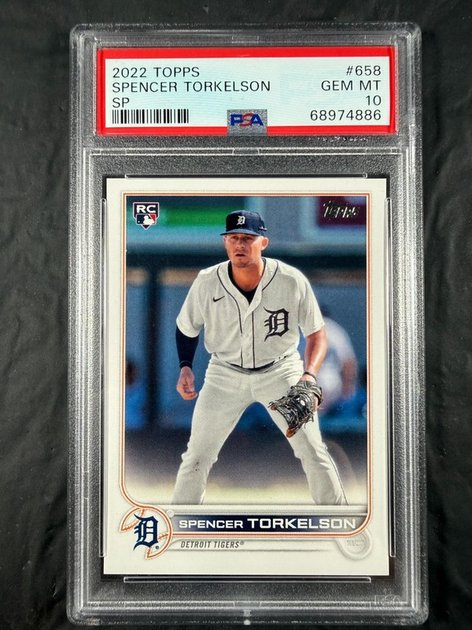
Best Sports Cards to Grade (2026 Guide)
Discover the best sports cards to grade in 2026. Focus on high-demand rookies, vintage stars, and rare parallels for maximum ROI.
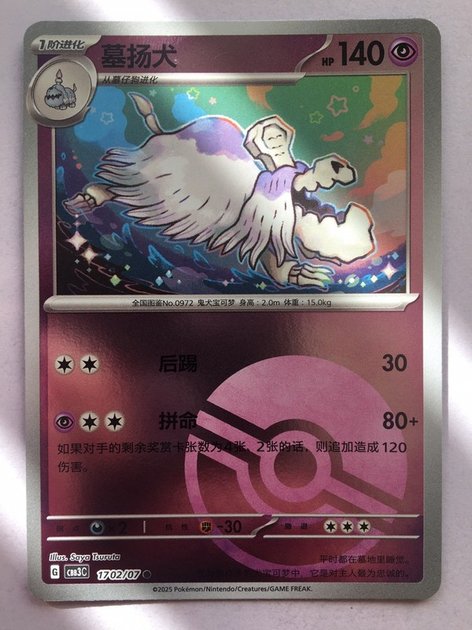
How to Sell Pokemon Cards Online (2026 Guide)
Master how to sell Pokemon cards online in 2026 with expert tips on grading, platforms, and pricing.
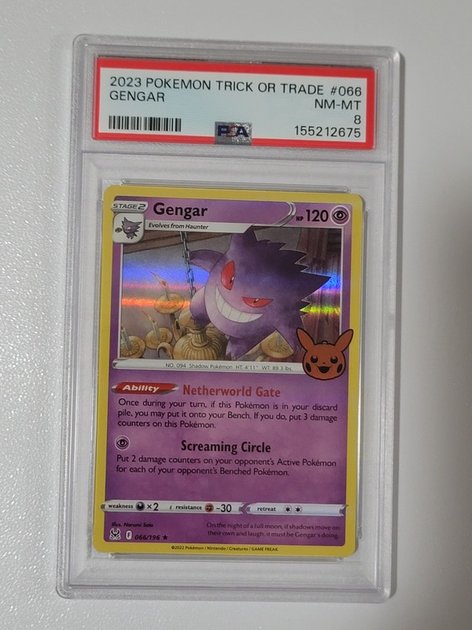
SGC vs PSA Grading for Pokemon Cards (2026 Guide)
SGC vs PSA grading for Pokemon cards in 2026: explore the key differences, costs, turnaround times, and resale premiums to choose the best grading service for your collection.
Grading is one of the highest-leverage skills in collecting. Get it right and you compound your collection’s value; get it wrong and you’re paying a 30%+ tax to PSA. Start with our PSA submission walkthrough for the mechanics, then run the ROI formula on any card you’re considering before you lick a stamp.
After the slab comes back: list it in 30 seconds
Once your card is graded and in-hand, the next bottleneck is listing it on eBay. Typing out titles, looking up cert numbers, picking the right category — a single listing takes 10+ minutes by hand. Worse on a full submission return.
I built SlabSnap after too many long nights listing my own slabs. Scan the PSA barcode or CGC QR code and the app auto-fills year, set, card name, grade, category, and an eBay-optimized title. Most users finish a listing in under 30 seconds. Free on iOS, Android, and web.