Pokemon Card Centering Guide for Grading (2026)
This post contains affiliate links. We may earn a commission at no extra cost to you.
Centering — how evenly a card’s artwork sits within its borders — is the single biggest factor separating a Gem Mint 10 from a 9. For a PSA 10 you need roughly 55/45 front centering and 75/25 on the back; a BGS Pristine 10 demands near-50/50 on both sides, and CGC accepts about 55/45 on the front. This guide breaks down each grader’s 2026 centering standard, the tools to measure your cards before you submit, and how centering drives value.
If you’ve spent time browsing eBay comps or grading population reports, you know that centering is paramount for top-tier grades. It’s the make-or-break factor that separates a solid 9 from an elusive Gem Mint 10 — and as grading standards tighten, the bar has only gotten higher.
The landscape of Pokémon card grading, especially concerning centering, is constantly evolving. What might have passed for a 10 a few years ago might land you a 9.5 or even a 9 today. This isn’t just theory; we’re seeing real shifts from the biggest names in the industry. So, let’s dive deep into how to assess, understand, and ultimately master centering to give your cards the best shot at grading glory.
Understanding Centering: Why It’s Critical for High Grades
At its core, centering refers to how evenly the card’s artwork or image is positioned within its borders. Think of it as the picture frame around your beautiful Pokémon art. Ideally, you want those borders to be perfectly uniform on all four sides - top, bottom, left, and right.
Why is it so critical? Because it’s one of the four main pillars of card condition that grading companies meticulously scrutinize, alongside corners, edges, and surface. But centering often acts as the biggest bottleneck. You can have a card with pristine corners, razor-sharp edges, and a flawless surface, but if the centering is off, that Gem Mint 10 is usually out of reach. It’s a visual element that screams “perfection” or “imperfection” immediately, making it a cornerstone of what constitutes a “Gem Mint” collectible. A well-centered card just looks right, elevating its aesthetic appeal significantly.
Grading Company Centering Standards: PSA vs. BGS vs. CGC vs. TAG
This is where it matters most. Each major grading company has its own strict, and sometimes subtly different, standards for centering, especially when aiming for those coveted 10s. And the big news is, these standards aren’t static.
The Evolving Landscape of Centering Tolerances
Around early 2025, a significant “silent” update from PSA sent ripples through the collecting community. For a PSA 10, the front centering tolerance reportedly shifted from the long-accepted 60/40 ratio to a more stringent 55/45. This means the image on the front of your card must be centered within a tolerance not exceeding approximately 55% on one side and 45% on the other. The reverse of the card, however, still maintains a more lenient 75/25 tolerance. This tighter front tolerance makes fresh 10s harder to come by, increasing the rarity of truly perfect cards.
Other grading giants maintain their own rigorous benchmarks:
-
Beckett Grading Services (BGS): Known for their ultra-strict grading, especially for the elusive Pristine 10 (the “Black Label”). For a BGS Pristine 10, you’re looking for near-perfect 50/50 centering on both the front and back. For a Gem Mint 9.5, BGS typically requires 55/45 or better on the front and 75/25 or better on the back. BGS doesn’t play around - if you’re chasing that Black Label, every micron counts!
-
Certified Guaranty Company (CGC): A popular choice, especially for modern Pokémon, CGC also has clearly defined centering guidelines. For a CGC 10, the front centering should be approximately 55/45. A 9.5 allows for 60/40, and a 9 permits 65/35. Their transparency is appreciated, allowing collectors to gauge their cards more accurately.
-
TAG Grading: The newcomer on the block, TAG brings a fascinating, data-driven approach. They utilize an AI system for laser-precise measurements, scoring centering with incredible accuracy and emphasizing transparent, consistently enforced standards. If you’re into cutting-edge tech in grading, TAG is definitely one to watch.
Here’s a quick overview of the main company standards for their highest grades:
| Grading Company | Front Centering (Gem Mint 10 / Pristine 10) | Back Centering (Gem Mint 10 / Pristine 10) | Notes |
|---|---|---|---|
| PSA | 55/45 (reportedly updated) | 75/25 | Stricter front tolerance, impacting new 10s. |
| BGS | 50/50 (for Pristine 10); 55/45 (for 9.5) | 50/50 (for Pristine 10); 75/25 (for 9.5) | Highest standard for Black Label. |
| CGC | 55/45 | (Not explicitly stated for 10, generally strict) | Allows 60/40 for 9.5, 65/35 for 9. |
| TAG | AI-measured, laser-precise, transparent | AI-measured, laser-precise, transparent | Data-driven, consistent scoring system. |
Essential Tools for Precise Centering Assessment
The good news is, you don’t have to rely solely on your eyeballs and a prayer anymore. The increased focus on precise centering has spurred the development of fantastic tools to help collectors accurately assess their cards before submission. Identifying a non-10 contender before you pay saves grading fees.
Physical & Digital Aids
-
Physical Centering Tools: These often include 3D-printed bases, clear acrylic guides, or specially printed centering cards. You place your raw card alongside these guides, aligning the borders to visually check for evenness. They can be incredibly helpful for a quick, tangible assessment, especially when you’re sorting through a bulk collection.
-
Digital Centering Calculators and Apps: These are increasingly the standard for serious pre-screening. Websites and mobile apps allow you to upload high-quality, straight-on images of your card. The software then performs an automated analysis, providing precise horizontal and vertical centering percentages. Many even offer grade predictions based on different grading company standards. This takes a lot of the guesswork out of it!
A potentially high-grade card should go straight into a Ultra Pro Penny Sleeves 100 Count and then a Ultra Pro 3x4 Regular Toploaders 25 Count, followed by a quick straight-on photo for a digital centering check. It’s the most reliable way to catch border imperfections you might miss by eye.
How Centering Impacts Your Card’s Market Value
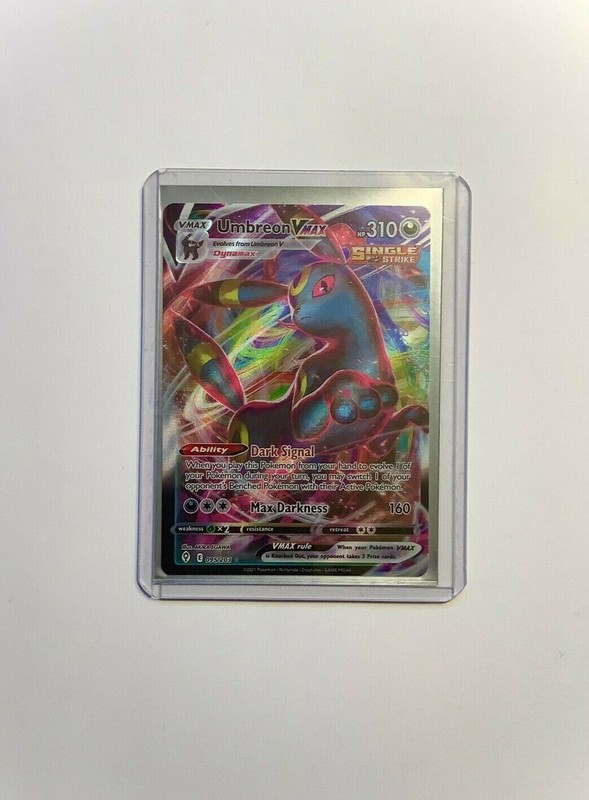
You might be thinking, “Does a tiny bit off-centering really make that much of a difference?” The resounding answer in the collector market is: absolutely, yes!
While the graded-card market remains strong — with Pokémon a major driver of submission volume — the condition of that card, and especially its centering, directly correlates to its market value.
A PSA 10, BGS 9.5 (or higher), or CGC 10 carries a significant premium over a 9 or even a 9.5. This isn’t just a slight bump; for popular cards, we’re talking about multiples in value. The reason is simple: scarcity. The stricter centering requirements mean fewer cards will achieve those top grades. This potential decrease in the supply of newly graded Gem Mint 10s is expected to further increase the value of existing 10s, which were potentially graded under slightly more lenient standards. Perfectly centered raw cards also become increasingly desirable for collectors chasing those high grades, potentially fetching higher prices even before grading.
Think about chasing those iconic Umbreon ex SIRs or rare Charizard variants. The difference in value between a perfectly centered example and one that’s slightly off-center can be astronomical. Centering isn’t just a grading spec; it’s a fundamental driver of a card’s collectibility and investment potential.
Community Debates & Adapting to Stricter Centering Rules
The Pokémon card community is a vibrant, opinionated bunch, and these stricter centering standards, especially PSA’s rumored shift, have ignited plenty of discussion. Head over to Reddit or any major collector forum, and you’ll find plenty of threads debating the impact.
Many collectors voice frustration that achieving a PSA 10 is now significantly harder. This has led to speculation that previously graded PSA 10s, evaluated under the old 60/40 standard, might become even more valuable due to the perceived scarcity of new 10s. Some welcome the increased rigor, seeing it as a necessary step towards truly defining “Gem Mint” quality. Others, however, lament the perceived subjectivity that still exists, even with stated tolerances, arguing that grading can feel like a lottery at times.
Despite the debates, the consensus among serious collectors remains clear: centering is paramount. We’re all adapting. Collectors are investing more time and resources into pre-screening. We’re getting better at identifying potential 10s and, importantly, identifying cards that just won’t make the cut due to centering.
Collector Tip: Don’t chase a 10 with a known centering flaw. While a card might look “good enough” to your eye, grading company standards are incredibly precise. Sending in an obviously off-center card is often a wasted grading fee. Save your money for the truly exceptional pieces.
Your Pre-Submission Checklist for Optimal Centering
So, you’ve got a card you think has the potential for a 10. You’ve checked the corners, edges, and surface. Now, let’s get serious about that centering. Here’s a reliable pre-submission checklist:
- Initial Visual Scan: First, a quick once-over. Does anything immediately jump out as off-center? Look at the width of the top and bottom borders, and the left and right borders.
- Utilize Centering Tools: This step is non-negotiable. Either use a physical guide or, preferably, a digital centering app. Take a high-quality, straight-on photo against a neutral background. Get those exact percentages. This will tell you if you’re hitting those 55/45 or 50/50 targets.
- Check Both Front and Back: Remember, the back of the card matters too, especially for BGS and for PSA’s 75/25 tolerance. A beautifully centered front can be undermined by an off-center reverse.
- Magnification: Sometimes, a slight shift is only visible under magnification. A jeweler’s loupe or a good macro lens on your phone can reveal subtle border differences.
- Compare to Known Graded Cards: If you have any graded slabs in your collection, especially 9.5s or 10s, hold your raw card next to them (carefully!) to get a feel for what perfect centering looks like in a graded context.
- Protect It: Once you’ve identified a strong candidate, immediately protect it. After a penny sleeve, submission-ready cards go into semi-rigid holders — they offer firm protection without being too bulky and are specifically requested by most grading companies (PSA and CGC included). PJU Semi-Rigid Card Holders are a solid choice for their rigidity, and Cardboard Gold Card Saver 1 is a classic for a reason.
Remember, every card is unique, and sometimes minor factory cutting imperfections are unavoidable. But by understanding the standards and utilizing the right tools, you can significantly improve your odds of landing that coveted Gem Mint 10.
Centering might be a tough hurdle, but mastering its assessment is one of the most rewarding skills you can develop as a Pokémon card collector. It not only increases your chances for higher grades but also helps you appreciate the true artistry and precision of a perfectly manufactured card.
Once your card clears centering, walk through the rest of the process in our how to submit cards to PSA guide, and see how grade tiers translate to real money at the card grading hub. Start pre-screening your cards today and only submit the ones that truly shine.
Frequently Asked Questions
What does “baka centering” mean?
“Baka centering” is collector slang for a card with extremely good, near-50/50 centering — the kind worth grading. “Baka” is a Japanese intensifier (literally “stupid” or “crazy”), so a “baka centered” card is one that is absurdly well centered. The term spread from Japanese pack-opening videos where buyers reject card after card hunting for that one flawlessly centered pull.
What counts as good centering for a PSA 10?
As of 2026, PSA looks for front centering of roughly 55/45 or better and back centering of about 75/25 for a Gem Mint 10. BGS holds the strictest bar — close to 50/50 on both sides for a Pristine 10 Black Label — while CGC accepts about 55/45 on the front for its 10.
How do I check a card’s centering before grading?
Photograph the card straight-on against a neutral background and run it through a digital centering calculator, which returns exact left/right and top/bottom percentages against each grader’s standard. Physical acrylic guides work for a quick bulk sort, but a digital measurement is the most reliable way to confirm you are hitting the 55/45 or 50/50 target before paying a grading fee.